

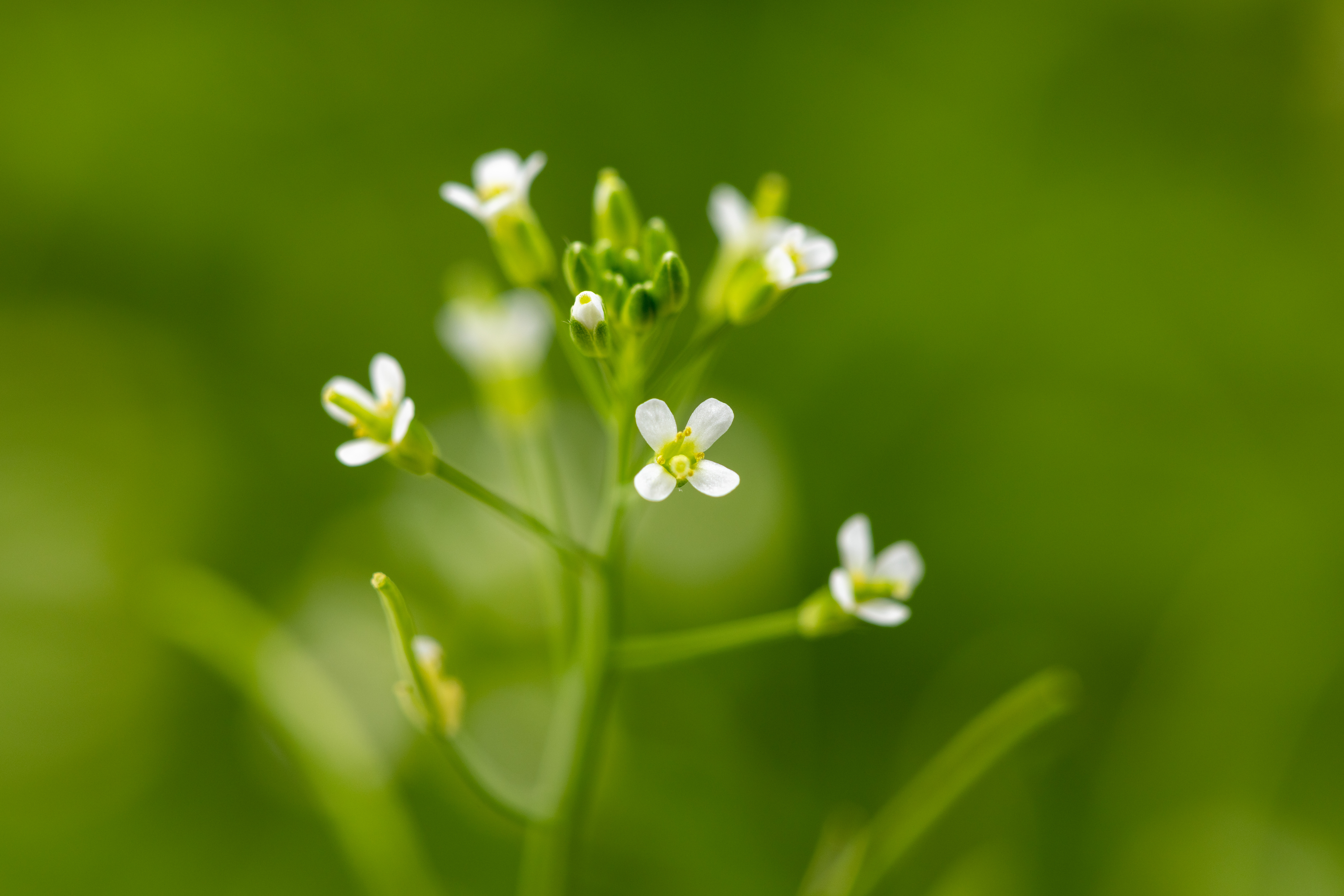
A completely new mechanism that enables plants to form vascular tissues for efficient transport of water and nutrients has been published by the prestigious scientific journal Science. The research, led by the University of Cambridge and the University of Helsinki, also involved scientists from CATRIN at Palacký University and the Laboratory of Growth Regulators, a joint facility of the Institute of Experimental Botany of the Czech Academy of Sciences and the Faculty of Science at Palacký University. The study opens the way for future research aimed at optimizing growth traits of crops important for agriculture and forestry, including the production of commercially significant materials such as wood, paper, and bioproducts.
“This research clarifies how plants finely tune the development of vascular tissues and determine the fate of their vascular cells. The findings may influence plant traits ranging from drought tolerance to root and tuber growth in food crops, as well as wood formation,” said co-first author Raili Ruonala from the University of Helsinki.
By studying the model plant Arabidopsis thaliana, the scientists uncovered regulatory dynamics governing xylem formation. This conductive tissue functions as the plant’s “plumbing system,” distributing water and minerals from the roots while also providing structural support. The researchers then focused on thermospermine — a small positively charged polyamine molecule already known to regulate vascular cell differentiation. They found that the fate of certain plant cells in the vascular system depends on the cooperation of two factors: thermospermine and a specific chemical modification of the ribosome — the cell’s “protein factory.” The study confirmed that only ribosomes carrying a particular chemical “mark” on their RNA allow thermospermine to bind properly and subsequently direct cellular development.
“This is the first experimental evidence of this mechanism. Polyamines are synthesized by all living organisms, and therefore this research is relevant not only for plants but also for other organisms, including in the field of human health,” said Nuria De Diego.
Members of the CATRIN author team have long focused on polyamines as regulators of plant growth in studies of plant stress responses. Polyamines help plants grow better and cope with stress, for example by influencing which genes are switched on or off in the cell and how proteins are produced accordingly. The researchers have now shown that these molecules can also directly affect the formation of cellular ribosomes.
“These findings are significant because they provide the first experimental proof of this mechanism. Moreover, polyamines are synthesized by all living organisms, which makes this research relevant not only for plants but also for other organisms, including human health,” said study co-author Nuria De Diego, head of the Plant–Environment Interactions research group at CATRIN. Together with her colleague Sanja Ćavar Zeljković, she was responsible for polyamine measurements within the international team. They continue to collaborate with the University of Helsinki, the University of Cambridge, and the Polish Academy of Sciences to apply the discovery to understanding secondary tree growth and certain diseases.
Ondřej Novák, head of the Laboratory of Growth Regulators, contributed to the international multidisciplinary research by characterizing plants carrying a mutation in a gene whose activity is influenced by chemical modification of ribosomes after thermospermine binding.
“The study provides the first evidence that a polyamine can specifically regulate gene expression directly at the ribosome. Detailed structural analysis also shows precisely how thermospermine binds. The research thus reveals a new regulatory principle and sheds light on a puzzle discussed for more than 15 years — namely how thermospermine can selectively activate or suppress different groups of genes solely through ribosomes carrying a specific chemical mark,” Novák said.
Although the research was conducted on the model plant Arabidopsis thaliana, it suggests that similar signaling may occur in other plants. In trees, for example, these signals could be tuned to promote the formation of large numbers of conductive vessels for vertical growth, while in radishes they could be adjusted in favor of storage cells in the root, allowing the plant to accumulate more energy reserves.